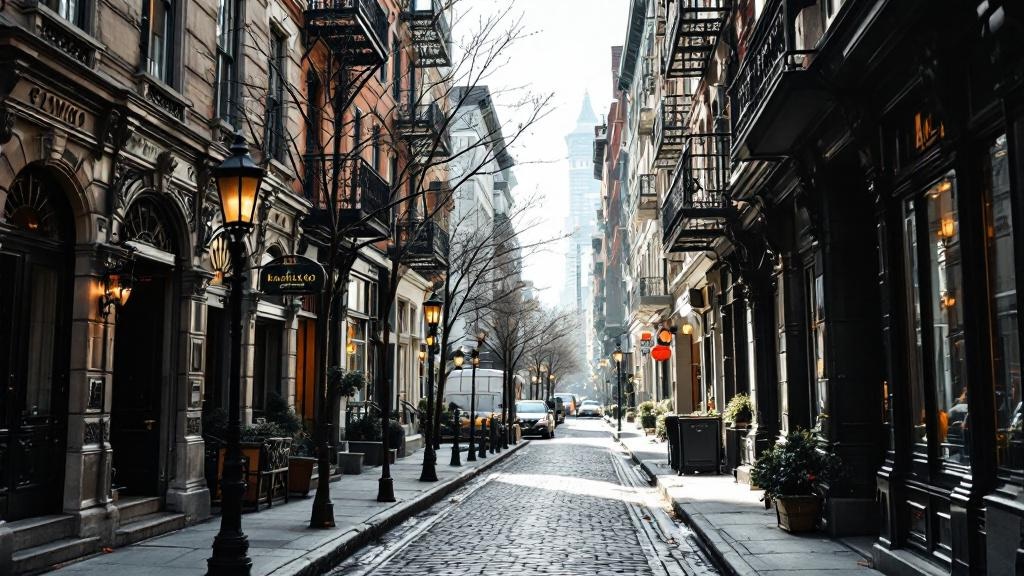
The West Village does not submit to a grid. It has its own logic, its own pace, and its own insistence on being discovered on foot. The streets do not run parallel or perpendicular to anything; they follow the old wagon paths and property lines of the 1820s. Getting slightly lost here is not a problem. It is the point.
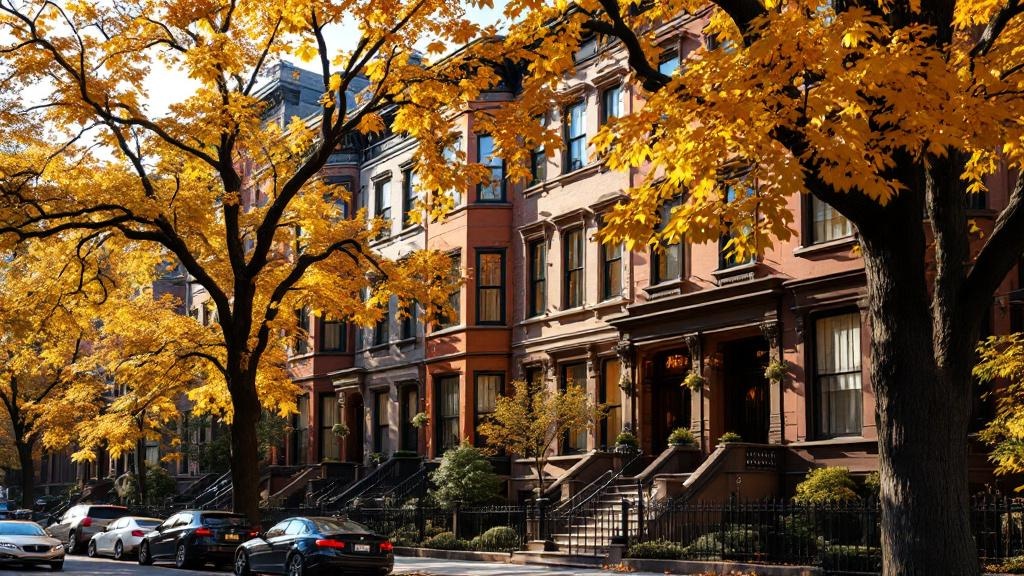
This is the New York that most people are imagining when they imagine New York. Not Times Square, not the gleaming towers of Midtown. This: a quiet block of brownstones on Charles Street at 8 in the morning, the smell of coffee from a narrow espresso bar, a single maple tree pulling the light through its leaves onto the sidewalk. This neighborhood is why people move here and stay for decades.
The West Village occupies the blocks west of Seventh Avenue South, roughly from Christopher Street south to the Hudson River. It is a sub-neighborhood of the larger Greenwich Village, though anyone who lives here will tell you the distinction matters. The West Village has a specific quality of quietness, a residential density that keeps chain stores largely out, and an architectural coherence that makes it feel like a village inside a city. That feeling is real. It is also increasingly rare in Manhattan.
How to Start: The 1 Train to Christopher Street
The logical entry point is the Christopher Street - Sheridan Square station on the 1 train. Exit onto Christopher Street and orient yourself: the Hudson River is to your right, the rest of Manhattan is behind you. Walk west. The first two blocks of Christopher Street between Seventh Avenue South and Bleecker are the commercial heart of the neighborhood. You will find the standard coffee shops and boutiques here, but keep walking. The neighborhood gets better the further west you go.
At Bleecker, turn right and walk a block to Perry Street. Turn left. Perry is one of the best residential blocks in the neighborhood: narrower than Christopher, lined on both sides with original Federal-style row houses, quieter at virtually every hour. Walk it from end to end. At the intersection with West Fourth Street, note the geometry: three streets are converging at a point that technically should not exist. This is the West Village working against the grid and winning.
The streets do not run parallel to anything. They follow the wagon paths of the 1820s. Getting slightly lost here is not a problem. It is the point.
The Six Streets You Cannot Skip
Every walking guide to the West Village covers the same ground. Here is the honest version: six streets that each reveal something different about the neighborhood, none of them requiring a map.
Bank Street runs east-west and is among the widest residential streets in the neighborhood. The townhouses on the south side between West Fourth and Hudson were built in the 1840s and represent some of the best-preserved Federal-period architecture in the city. The light comes from the south at midday and makes the brick facades glow in a way that is worth going out of your way for.
Horatio Street is shorter than it looks on a map and often overlooked in favor of its more famous neighbors. Walk it. The intersection with Greenwich Avenue produces an angular street corner that photographers use constantly. The florist on the corner is one of the oldest continuously operating retail businesses in the neighborhood.
Jane Street runs one block between Hudson and West Fourth and contains a cluster of buildings that were constructed as seamen's housing in the early 19th century. The Hotel Jane at the western end was built in 1908 and still operates. The building's facade, a narrow six-story brick pile, has barely changed in a century.
Grove Street is the neighborhood's prettiest block by consensus. The Grove Court cul-de-sac, tucked behind a wrought-iron gate mid-block, is a semi-private mews of Federal-style houses that dates to the 1850s. The gate is usually closed but you can see through it. The trees in the courtyard are among the oldest in the neighborhood.
Commerce Street curves. No Manhattan street is supposed to curve, but Commerce Street does, following the line of a stream that ran through this area before the city was built. The Cherry Lane Theatre at number 38 has been operating continuously since 1924 and is one of the oldest off-Broadway venues in the city.
Leroy Street starts at Seventh Avenue South and ends, improbably, as St. Luke's Place by the time it crosses Hudson. Same physical street, two names, no logical explanation. St. Luke's Place is lined with Italianate rowhouses and has one of the best concentration of street trees in the neighborhood. The mayor's ceremonial lamp posts mark number 6, where Jimmy Walker lived when he was mayor in the 1920s.
Where to Stop: The Four Restaurants Worth the Trip
The West Village has more good restaurants per block than almost any neighborhood in the city. These four are worth the trip on their own.
| Restaurant | Street | What to Order | Best For |
|---|---|---|---|
| Via Carota | Grove St at Bedford | Insalata verde, whole roasted fish | Long dinner with good wine |
| Buvette | Grove St | Croque monsieur, any of the eggs | Morning coffee and late breakfast |
| Corner Bistro | West 4th at Jane St | Bistro Burger, draft beer in plastic cups | Late night, no reservations needed |
| Fedora | West 4th at Bank St | Whatever is on the seasonal small plates menu | Weekend dinner, neighborhood feel |
The Hudson River Greenway: How to End the Walk
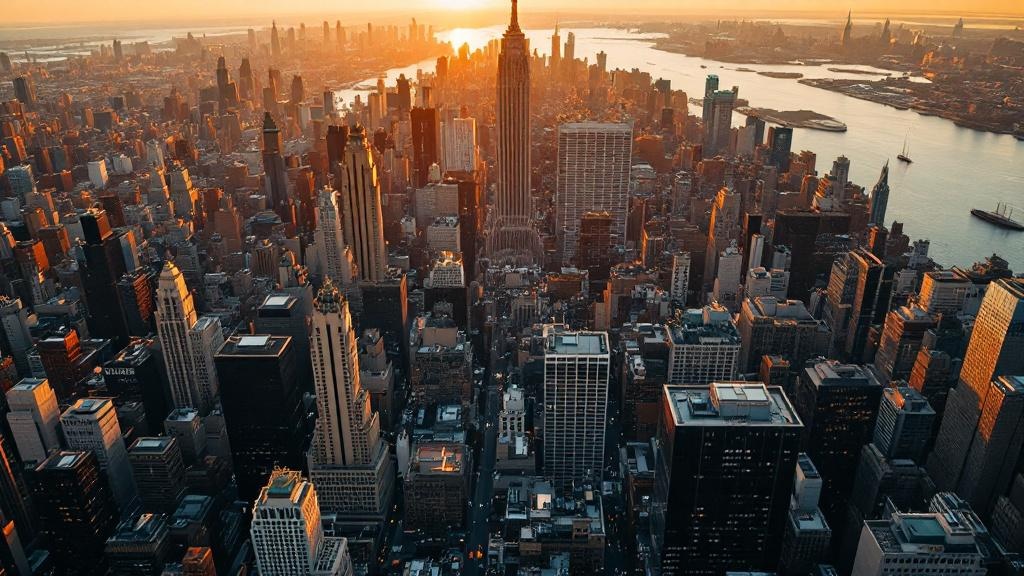
Every West Village walking tour should end at the Hudson River. Walk any westward street to its end and you will hit the Greenway, a paved path that runs the full length of Manhattan's west side. At the West Village section, the view is across the river to New Jersey, and at sunset, the sky behind the Palisades turns orange in a way that makes it hard to believe you are standing inside one of the most densely built cities in the world.
Pier 45, at the end of Christopher Street, is the neighborhood's main gathering point in good weather. It gets crowded on weekends. Come on a Tuesday evening instead, when the light is the same and the pier is half-empty. Walk north along the Greenway to the Whitney Museum if you want to add a cultural component. The walk takes about 15 minutes.
Timing Your Visit
The West Village at 8 a.m. on a weekday is a different neighborhood than the West Village at 7 p.m. on a Saturday. Both are worth experiencing, but they are not the same place. The morning version is residential and quiet: people walking dogs, the sound of garbage trucks on Hudson, the smell of coffee from half a dozen places. The evening version is animated and crowded: tables spilling onto sidewalks, the specific noise of a neighborhood that is simultaneously eating, drinking, and trying to get somewhere.
First-time visitors should come for a weekend morning. The light is good between 9 and 11 a.m. on clear days, the coffee lines move faster than they look, and the residential streets are at their most photogenic before the crowds arrive. Return on a weekday evening for dinner. The neighborhood completely changes character.
Avoid the blocks immediately around Christopher Street and Seventh Avenue South on weekend afternoons in summer, which is when the tourist concentration is highest. The blocks further west are almost always navigable regardless of the day.
Getting There and Getting Around
The 1 train stops at Christopher Street - Sheridan Square and at Houston Street. Either works depending on which end of the neighborhood you want to start from. The A, C, and E trains stop at 14th Street and provide good access to the northern blocks around Jane and Horatio streets. There is no shortcut through the neighborhood: the irregular street plan means that what looks like a straight path on the map is usually not one in practice. This is a feature, not a bug.
Cycling is practical on the Greenway and a few of the wider streets, but the cobblestones make riding through the residential blocks unpleasant. Walk. The neighborhood was built for walking, and it shows.
Walking Guide FAQ
How long does it take to walk the West Village?
The West Village is compact enough to cross in 20 minutes, but a proper walking tour covering the main streets takes two to three hours if you stop to eat and browse. Allow a full half-day to experience it without rushing.
What is the best time of day to walk the West Village?
Early morning for quiet streets and the best coffee without lines. Late afternoon for the light on the brownstone facades and outdoor seating filling up. Weekend mornings are lively but crowded; weekday afternoons are ideal for a calmer experience.
Is the West Village safe to walk at night?
Yes. The West Village is one of the safest and most active evening neighborhoods in Manhattan. Hudson Street and Bleecker Street maintain a steady stream of foot traffic into the early hours, and the residential blocks are well-lit and calm. Standard city awareness applies.
Which subway stop is closest to the West Village?
The Christopher Street - Sheridan Square station on the 1 train is the primary stop. The 14th Street station on the A, C, E lines serves the northern end. The Houston Street station on the 1 train works for the southern approach near the Hudson River Greenway.